





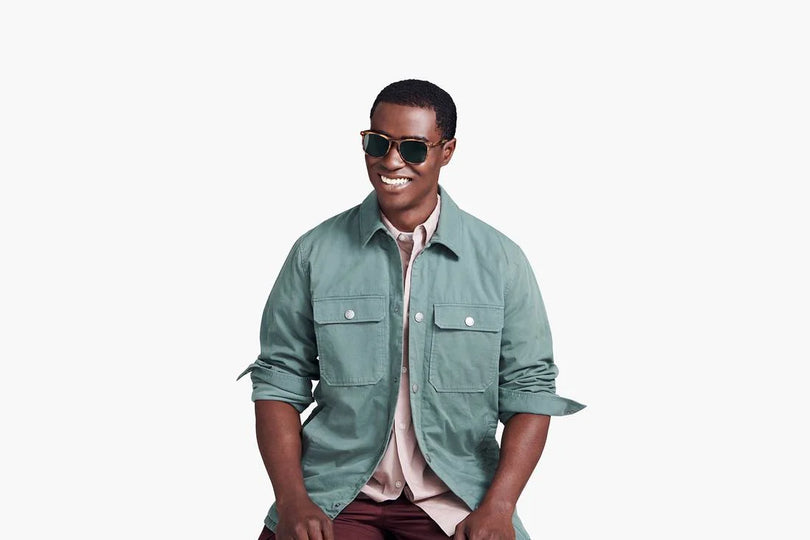
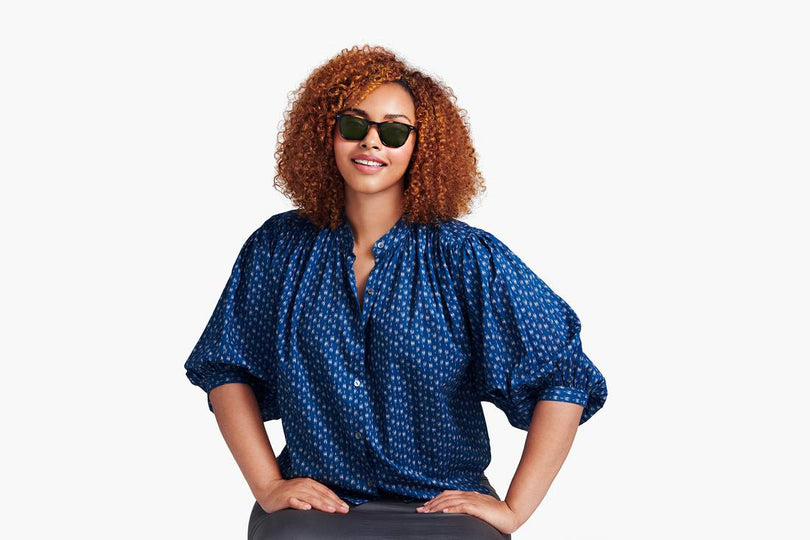










Geometric glasses are frames with flat sides and defined corners, such as hexagons and octagons, instead of a pure circle or rectangle. They suit most faces when the angles contrast with your features and the width matches your temples. Start with a thin metal version if you are unsure, and move to thicker acetate once you like the look.
What counts as a geometric frame?
Most eyewear shapes are variations on a circle or a rectangle. Geometric frames sit in between: the lens outline is built from straight segments that meet at visible corners. The result looks deliberate and architectural, but softer than a hard square.
- Hexagon: six sides, usually with a flat top and bottom. Reads as modern and slightly retro at the same time.
- Octagon: eight sides, so the corners are gentler and the shape comes close to round.
- Soft geometric: a round frame with subtle flat sections, a good first step if you normally wear round glasses.
- Rimless geometric: the lens itself is cut with angles and there is no rim around it, so the shape shows without adding weight.
You can browse every shape in one place in our geometric glasses collection, or narrow it down with the octagon glasses edit.
Which faces suit angular frames?
The old rule of contrast still works well: angles balance curves, and curves balance angles. Geometric glasses are rarely a bad choice because they mix both, but some pairings are especially easy.
| Face shape | How geometric frames help | What to look for |
|---|---|---|
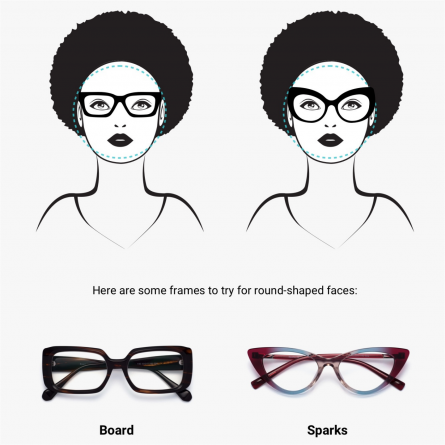
| Round | Corners add structure to soft cheeks | Hexagon with a flat top line |
| Oval | Almost any angular shape keeps the balance | Width close to the widest part of the face |
| Heart | Draws attention away from a wider forehead | Thin rims, lighter lower edge |
| Square | Works if the corners are soft | Octagon or soft geometric, not sharp hexagons |
| Long | Adds width across the middle of the face | Deeper lenses with a strong horizontal line |
Not sure which group you belong to? Our frames and face shapes guide walks you through it with a mirror and a few simple checks.
Thin metal or bold acetate?
The material changes the personality of a geometric frame more than the exact number of corners does.
Fine metal wire keeps the shape quiet. The angles show up as a delicate outline, which makes this the easiest option for the office, for first-timers and for anyone with smaller features. Mist is a good example: a thin full-rim metal frame whose lenses sit between round and hexagonal, with adjustable nose pads.
Acetate turns the same idea into a statement. Thicker rims make every corner visible from across the room, so this works best if you like your glasses to be part of the outfit. Wolcott is a hexagon acetate frame offered in black, crystal clear and tortoise.
Titanium sits in the middle: slim like wire, but with a crisp, technical feel. Cipher and Echo both use titanium with adjustable nose pads, which many people find comfortable for long days.


Styling geometric glasses day to day
Because the shape already does a lot of the talking, keep the rest simple.
- Repeat one line, not all of them. A structured blazer or a crisp collar echoes the angles without overloading the look.
- Let colour lead or follow. A bright rim such as Herbert in red or pink is the focal point, so pair it with neutral clothes. Gold or silver wire goes with almost anything.
- Match the metal to your jewellery. Rose gold frames next to rose gold earrings look intentional; mixed metals look busier.
- Watch your hairstyle. Sleek or pulled-back hair shows the full outline of the frame, while loose waves soften it.
- Consider a second pair. Herbert, Mist and most geometric frames can also be fitted with sun lenses, so the same shape works outdoors.
Getting the size right
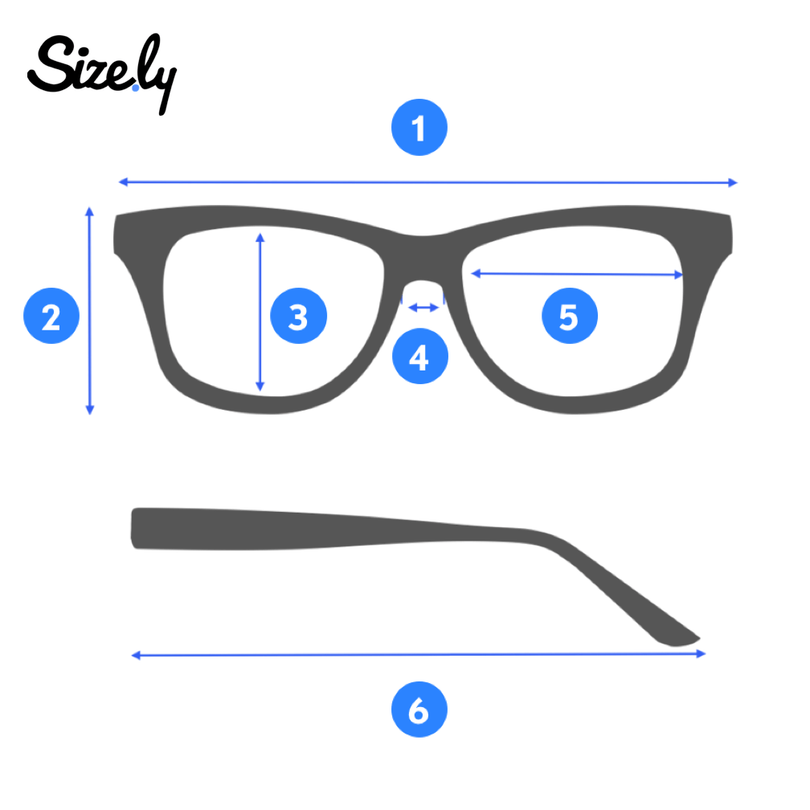
Angular frames make fit mistakes more visible. If the frame is too wide, the outer corners stick out past your face; too narrow and the corners press in towards your eyes. Aim for the outer edge of the frame to line up roughly with your temples, and for your eyes to sit near the horizontal centre of each lens.
The quickest way to check is to compare the measurements printed on the inside of a pair you already like. Our frame size guide explains what each number means. Note that geometric frames come in different sizes: most of ours are M, while Blocks is a smaller S fit.
Lenses for geometric frames
The lens is cut to follow the frame outline, so the corners of a hexagon or octagon are part of what you see through. That is rarely an issue for single vision prescriptions. For stronger prescriptions, a frame with a moderate width and thin rim usually keeps the lens edges neater, and a higher lens index can help with thickness. Rimless designs like Dogwood show the lens edge completely, so they look cleanest with lower to moderate prescriptions.
In our lens selector you can choose clear prescription lenses, blue light filtering lenses for screen work, or tinted sun lenses for any of these frames.
Shop this guide


Frequently asked questions
Are geometric glasses still in style?
Yes. Hexagon and octagon shapes have been a steady part of eyewear for several seasons because they feel modern without being extreme. Thin metal versions in particular have become an everyday classic.
What is the difference between hexagon and octagon glasses?
A hexagon has six sides and looks more angular; an octagon has eight, so its corners are softer and the overall shape is closer to round. If you are coming from round glasses, an octagon is the easier switch.
Can I wear geometric glasses with a square face?
You can, as long as the corners are soft. Choose octagon or soft geometric shapes in a thin rim rather than a sharp, heavy hexagon, which can repeat the angles of the jaw.
Do geometric frames work with progressive lenses?
Many do, provided the lens is deep enough from top to bottom to fit the reading area. Frames with a very shallow lower edge leave less room, so check the lens height before ordering.
Find your angle
Geometric glasses are one of the simplest ways to make your eyewear feel personal: pick the shape that contrasts with your face, choose the material that matches how bold you want to look, and get the width right. Explore the full geometric glasses collection, or compare lighter options in our titanium frames. Free shipping applies on orders over €99, and every frame is covered by our 14-day fit and style guarantee. Add your prescription in a few clicks with our lens selector.