



















Bifocal sunglasses are sun lenses with two prescriptions in one: the upper part is set for distance, and a small segment at the bottom is set for close-up reading. They suit people who need help both far and near and who are tired of swapping between sunglasses and reading glasses outdoors. If you only need a distance prescription, regular prescription sunglasses are the simpler choice.
Who actually needs bifocal sunglasses?
The short answer: anyone whose prescription has an ADD value and who spends real time reading or looking at things up close in bright light. The ADD number is the extra power for near vision, and it usually shows up from around the mid-40s onwards. Our guide on how to read a prescription shows where to find it.
Typical situations where a two-zone sun lens makes life easier:
- Reading a book or a menu on a terrace without taking your glasses off.
- Checking a phone, map or scorecard on a walk, a golf course or the beach.
- Gardening, fishing or boating, where you look into the distance and then at your hands.
- Driving as a passenger and switching between the road and a screen.
If you spend most of your outdoor time looking far away and rarely read in the sun, a single-vision pair may be all you need.
How bifocal sun lenses work
A bifocal lens has a visible dividing line. Above it is your distance prescription; below it sits the reading segment, usually a small half-moon or straight-top window. You look straight ahead to see far, and lower your eyes slightly to read. Because the two zones are separate, there is no transition area in between, which many first-time wearers find easy to understand.
The trade-off is the jump: as your gaze crosses the line, the image shifts. Objects at arm's length, like a car dashboard or a laptop, can fall between the two zones. That is the main reason some people choose progressive lenses instead. We compare both styles in detail in bifocal vs progressive lenses.
Your lens options for bifocal sunglasses
There is more than one way to get a sun lens with reading help. Here is how the common routes compare:
| Option | How it behaves | Good for |
|---|---|---|
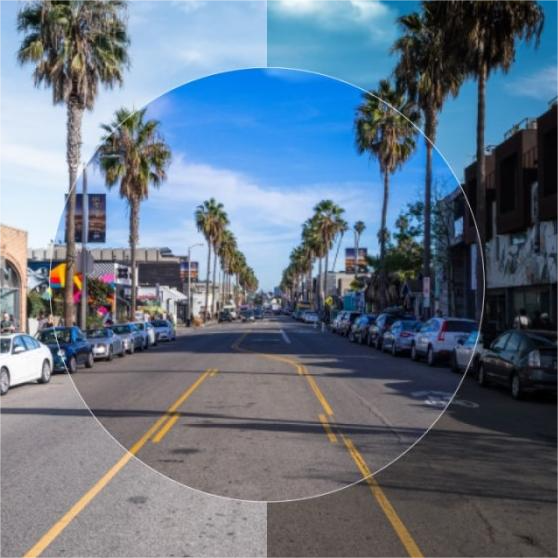
| Photochromic bifocal | Clear indoors, darkens in UV light outdoors | One pair for the whole day, in and out |
| Tinted bifocal | Always dark, both zones | A dedicated outdoor pair |
| Progressive photochromic | No line, smooth change from far to near, darkens outdoors | People who also need arm's-length vision |
| Single-vision sunglasses plus readers | Two separate pairs | Occasional reading outdoors |
In our lens selector, bifocal lenses are offered in a photochromic version and a blue-light-filtering version, and progressive lenses also come in a photochromic version. Which sun lens types you see depends on the frame and prescription type you pick, so open the selector on the frame you like and look through the list before you decide.
A practical note on photochromic lenses: most windscreens block much of the UV light that makes them darken, so they tend to stay lighter in the car. If you want a dark lens while driving, a dedicated pair of tinted or polarized single-vision sunglasses is usually the better companion.
Choosing a frame that works with a bifocal segment
The frame matters more for bifocals than for single-vision lenses, because the reading segment needs room at the bottom of the lens. A few rules of thumb:
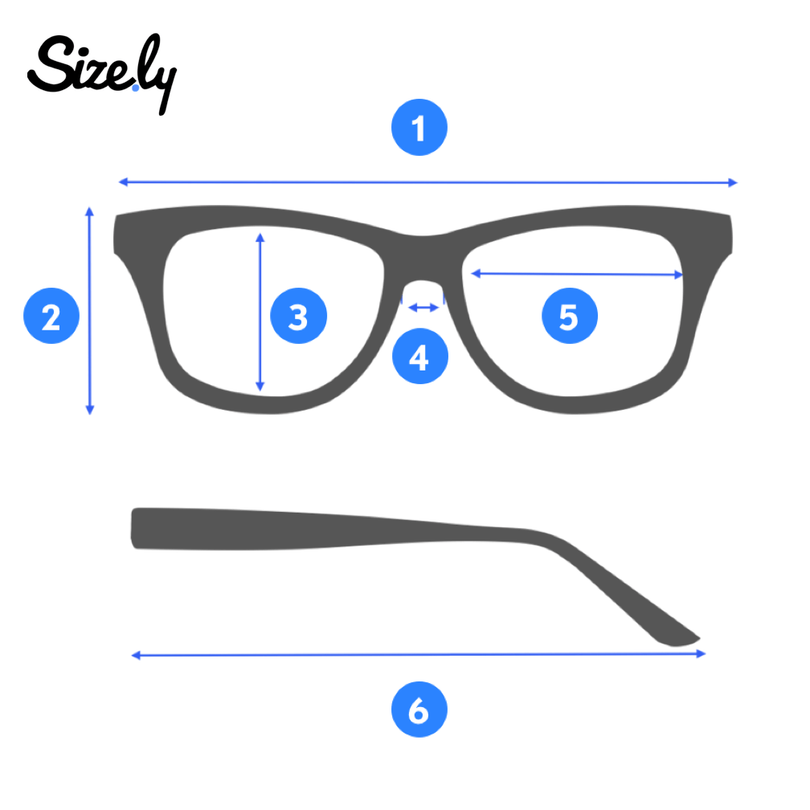
- Lens height. Many opticians suggest around 30 mm or more, so there is enough space above the line for distance and enough below for reading. Very slim, narrow frames squeeze one of the zones.
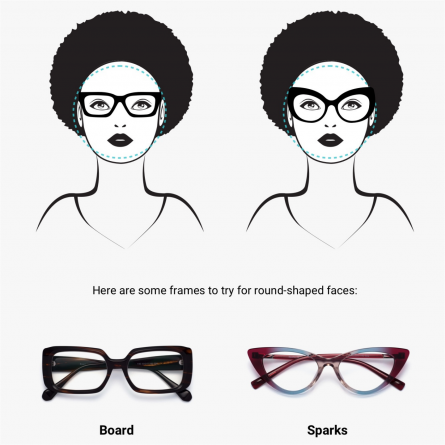
- Shape. Square, rectangle, round and soft oversized shapes all work, as long as the bottom edge is not sharply cut away. Strong cat-eye lifts at the lower corners reduce reading space.
- Full rim. A full-rim acetate frame holds a thicker sun lens neatly and hides the lens edge.
- Fit. The segment line should sit roughly at your lower eyelid. A frame that slides down your nose moves the line too, so check bridge width and temple length with our frame size guide.
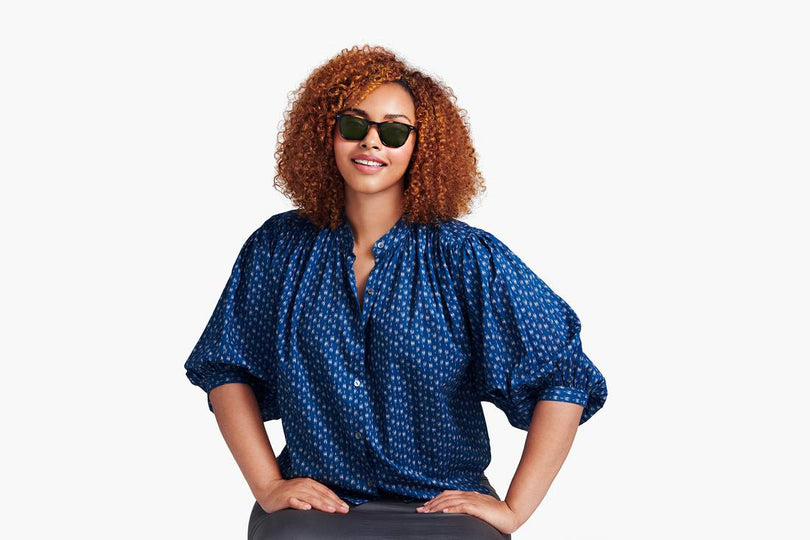
Two frames with generous lens areas: Kenora in Misty Peaks is a round acetate shape with a 40 mm lens height, and Matthew in Radiant Tortoise has a wide 57 mm lens for extra coverage.


Getting used to bifocal sunglasses
Most people settle in within a few days. Some habits help:
- Point your nose at what you want to see far away, and drop only your eyes to read.
- Take stairs and kerbs with your head tilted slightly down so you look through the distance zone, not the segment.
- Hold reading material a little lower than usual; the segment sits at the bottom of the lens.
- Wear them for short outings first, then build up to a full day.
If the line still feels distracting after a couple of weeks, that is useful information: a progressive design or a second single-vision pair may suit your routine better.
What to have ready before you order
Ordering bifocal sun lenses online goes smoothly when you have three things to hand: a current prescription that includes the ADD value, your pupillary distance (see how to measure PD), and the measurements of a pair you already find comfortable. Prescription lenses are made to order for each frame. Shipping is free on orders over €99, and every order comes with our 14-day fit and style guarantee.
Shop this guide


Frequently asked questions
Can I get bifocal lenses in any sunglasses frame?
Most full-rim frames with enough lens height work well. Very shallow or strongly angled frames leave too little room for the reading segment, so check the lens height before you choose.
Are bifocal sunglasses good for driving?
The distance zone is what you use on the road, and many drivers find a bifocal works fine for that. The dashboard can fall between the zones, though, and photochromic lenses tend to stay lighter behind a windscreen, so some drivers keep a separate tinted single-vision pair for the car.
Bifocal or progressive sunglasses: which is easier?
Bifocals are simpler to understand because there are only two zones and a clear line. Progressives look seamless and add an in-between zone, but they take a little longer to adapt to. Your daily habits decide which fits better.
What does the ADD on my prescription mean?
ADD is the extra magnifying power added to your distance prescription for reading. It is the number used to make the bifocal segment. Without an ADD value, you do not need a bifocal lens.
Find your outdoor pair
Bifocal sunglasses make sense when you read, check screens or work with your hands in bright light and do not want to swap glasses. Choose a frame with enough lens height, decide between photochromic, tinted or progressive, and keep your prescription and PD ready. Browse our prescription sunglasses, or explore women's sunglasses and men's sunglasses for more shapes. Add your prescription in a few clicks with our lens selector.