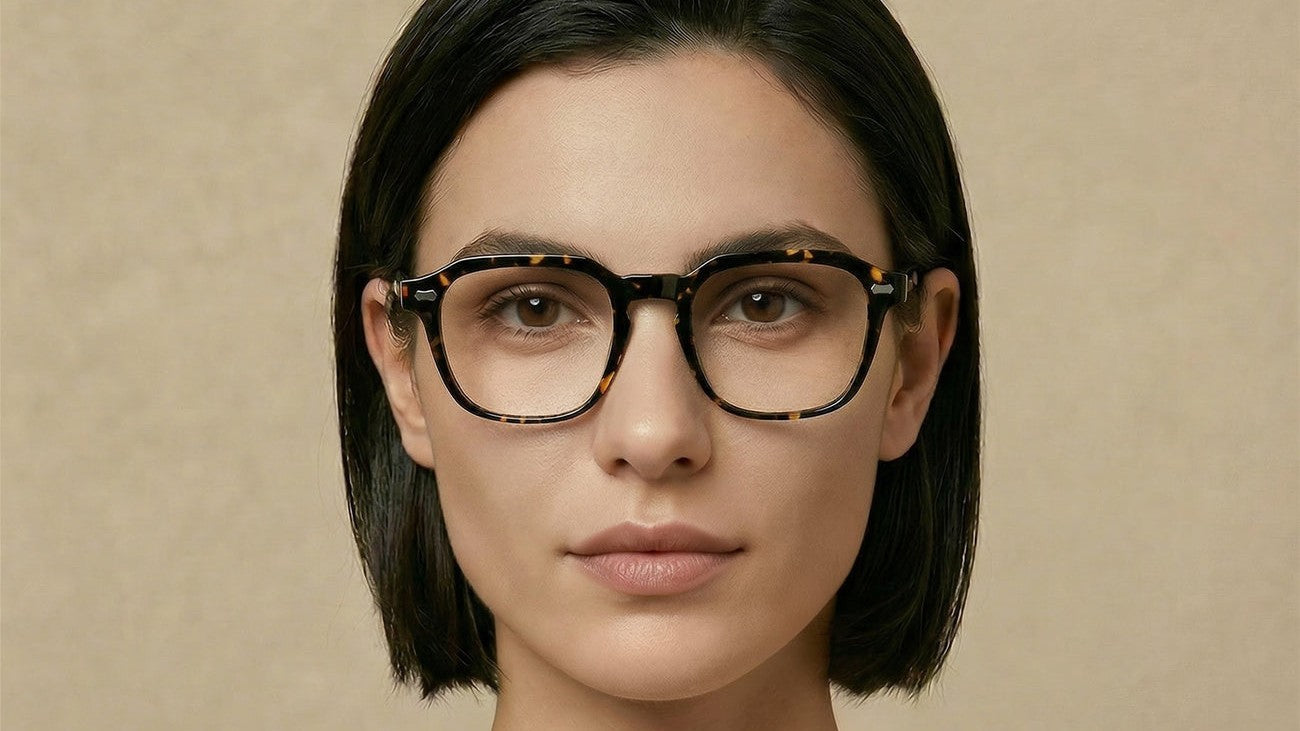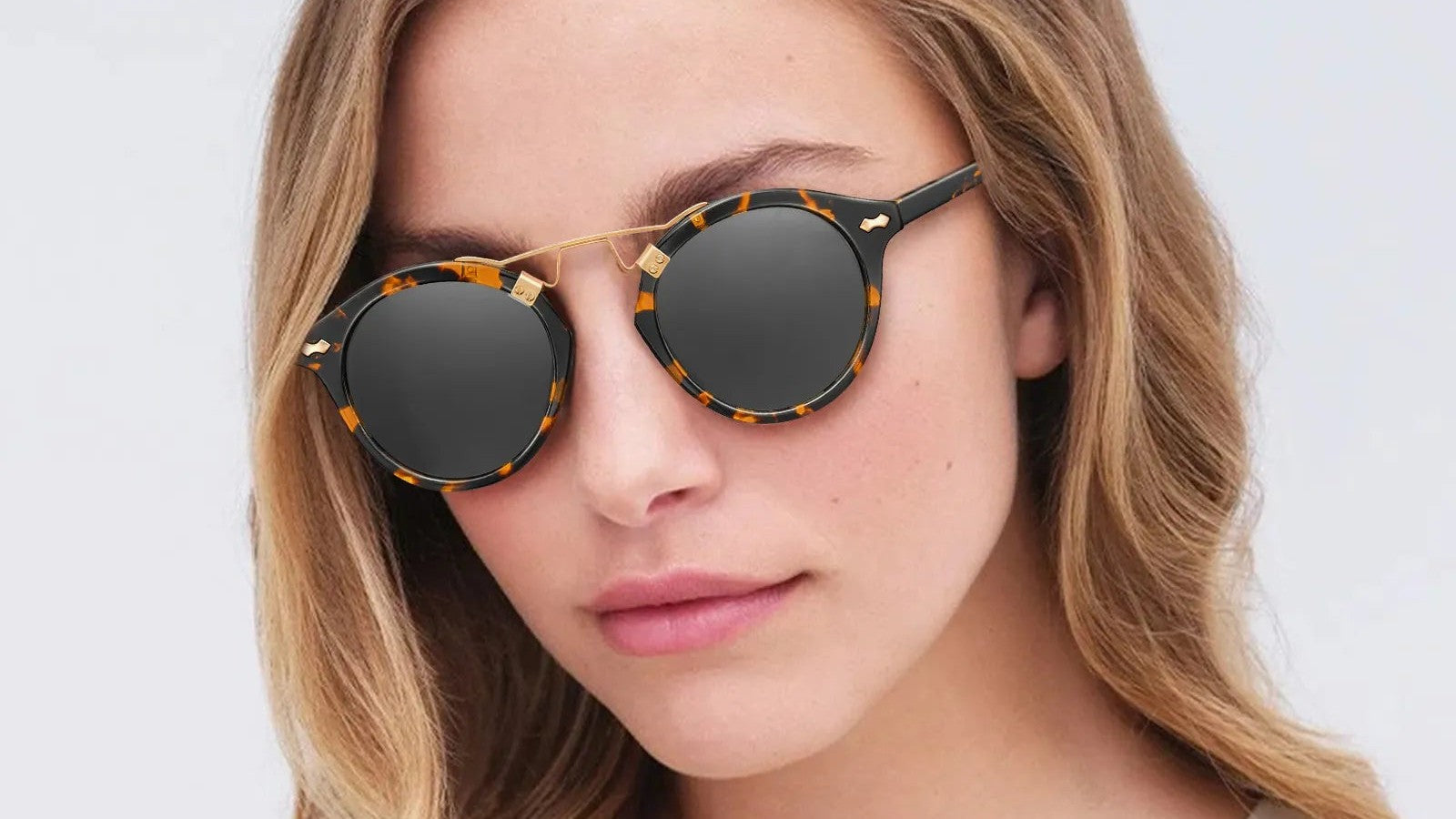




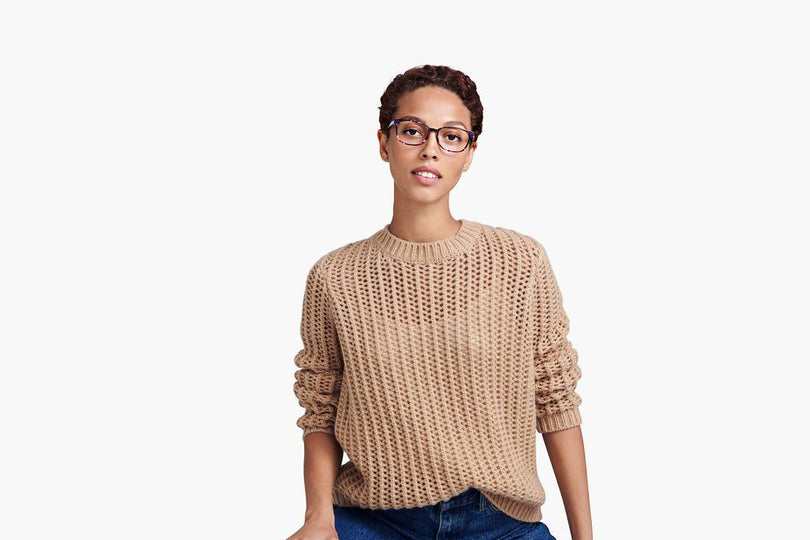
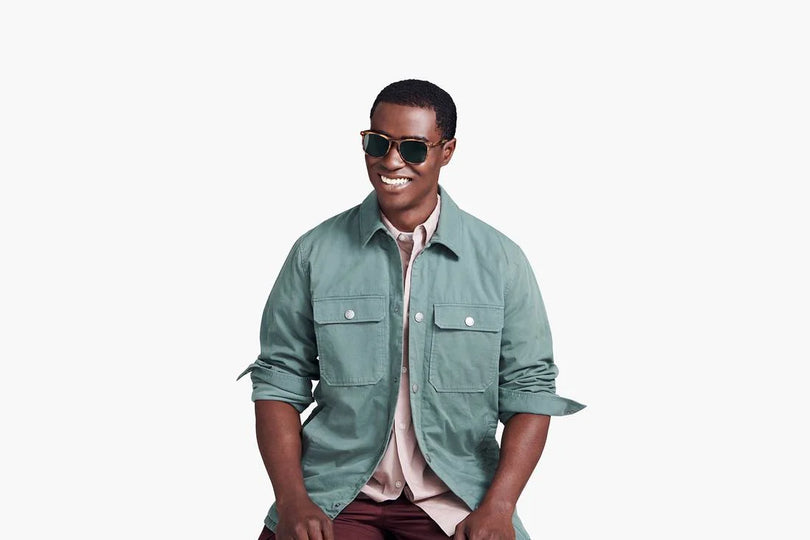
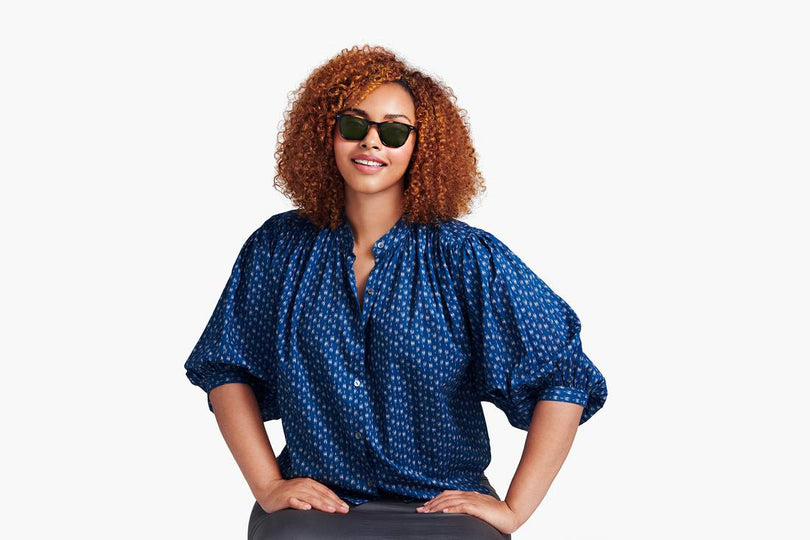




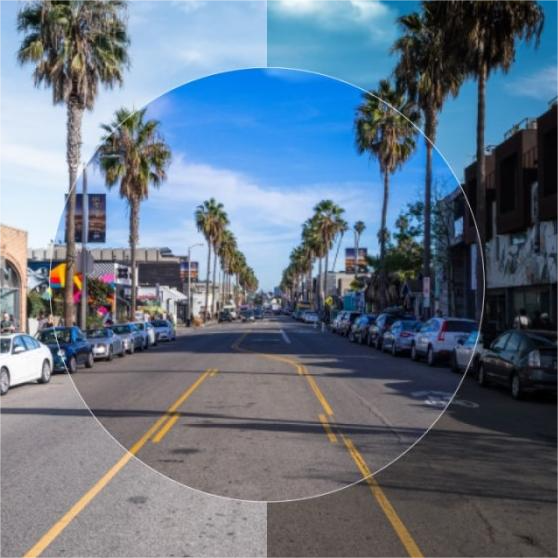






Square glasses have lenses that are almost as tall as they are wide, while rectangle glasses are noticeably wider than they are tall. Choose square if you want a bold frame that adds structure to a soft or round face; choose rectangle if you want a slimmer, lower-profile frame that lengthens the face and sits more quietly. The quickest way to tell them apart is to compare a frame's lens width with its lens height.
The real difference is proportion, not corners
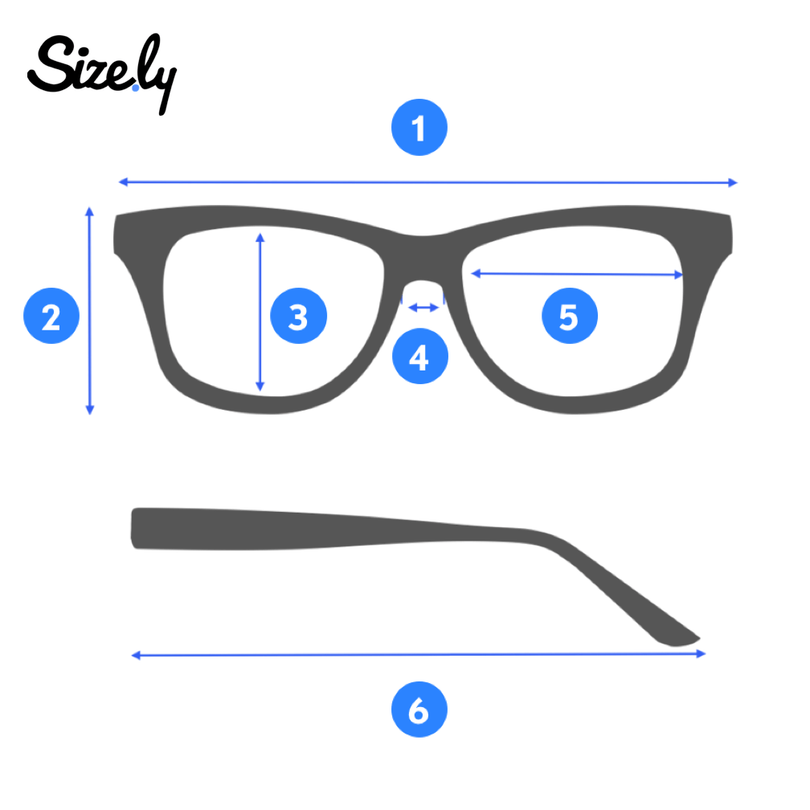
Both shapes have straight sides and defined corners, which is why shops and shoppers mix them up. What separates them is the ratio between lens width and lens height.
- Square: lens height is close to lens width. The frame looks "boxy" and covers more of the face vertically.
- Rectangle: lens width clearly exceeds lens height. The frame reads as a horizontal band across the face.
A useful rule of thumb: divide lens width by lens height. A result near 1.1 to 1.2 reads as square; around 1.3 sits in the soft-rectangle zone; 1.5 and above is a classic, slim rectangle. You can find both numbers on every product page and on the inside of the temple arm of glasses you already own (our frame size guide shows where to look).
Our frames, measured side by side
Here is how that ratio plays out across four frames we stock. All measurements come from the product pages.
| Frame | Lens width × height | Ratio | Reads as |
|---|---|---|---|
| Matthew | 57 × 50 mm | 1.14 | Oversized square |
| Kenosha | 53 × 41 mm | 1.29 | Classic square, slightly softened |
| Amory | 54 × 41 mm | 1.32 | Soft rectangle |
| Leoon | 52 × 30.6 mm | 1.70 | Slim rectangle |
Notice that Kenosha and Amory are close neighbours. Frames in that middle band are the most forgiving: they suit a wide range of faces and can be worn as either "a square" or "a rectangle" depending on how you style them.
Which shape suits your face?
Frames tend to look best when they contrast with your face's natural lines. Our face shape guide goes deeper, but the short version for these two shapes looks like this:
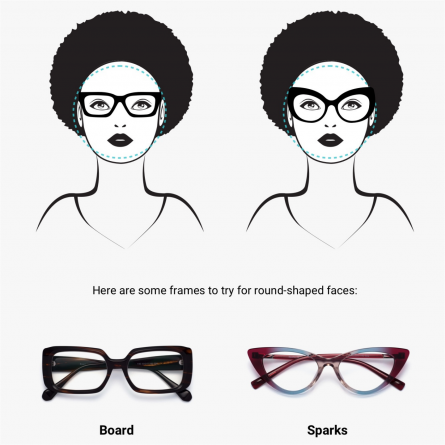
- Round faces: both work. Rectangle frames add width and visual length; square frames add sharper definition.
- Oval faces: almost anything goes. A square frame makes more of a statement, a rectangle keeps things understated.
- Heart-shaped faces: pick a square or soft rectangle with some depth, so the frame balances a wider forehead without looking top-heavy.
- Long or oblong faces: square frames usually win, because their extra height breaks up vertical length. Very slim rectangles can exaggerate it.
- Square faces with a strong jaw: many people prefer a softened version of either shape, with rounded corners, so the frame does not echo the jawline too closely.
Square glasses: when to choose them
Square frames are the fashion-forward option. Their depth gives them presence, so they work well if you want your glasses to be a visible part of your look. The extra lens height also leaves more vertical room, which many people find helpful if they plan to order progressive lenses, since those lenses need space for distance, intermediate and near zones.
Watch the size. An oversized square like Matthew has a 143 mm frame width, so it suits medium to wider faces. If you have a narrower face, a more compact square in the 50 to 53 mm lens range keeps the look without swamping your features.


Rectangle glasses: when to choose them
Rectangle frames are the everyday workhorse. They sit lower on the face, leave more of your cheeks and brows visible, and rarely clash with an outfit, which is why they are a common pick for the office. Slim rectangles like Leoon feel light and modern; deeper ones like Amory, with spring hinges and a 26 g weight, bridge the gap towards square.
The trade-off is lens height. A very shallow lens gives you less vertical field through the lens, so if you look down often to read or work on a laptop, a deeper rectangle is usually the more comfortable choice. Your optician or prescription details can help you decide when progressive lenses are involved.
Colour and material change the look too
Shape is only half the story. The same frame can feel completely different depending on finish:
- Black acetate sharpens the lines of both shapes and makes a square frame look more graphic.
- Tortoise warms the face and softens hard corners, a good way to try square frames if black feels too strong (browse our tortoise frames).
- Blue, navy or clear finishes make rectangles feel lighter and more casual.
Acetate frames like these are popular for both shapes because the material holds crisp edges while staying comfortable for long days. Explore all acetate frames if you want to compare finishes.
A quick way to decide in two minutes
- Check the glasses you own now and note lens width and height.
- Decide whether you want more presence (go squarer) or less (go more rectangular).
- Keep frame width within a few millimetres of your current pair.
- Pick a colour that matches how bold you want to go.
Then compare options in our square glasses and rectangle glasses collections.
Shop this guide


Frequently asked questions
Are square or rectangle glasses better for a round face?
Both add angles that balance soft curves. Rectangles add width and make the face look slightly longer; squares add stronger definition. If you are unsure, start with a soft rectangle.
How can I tell if a frame is square or rectangular online?
Divide the lens width by the lens height listed on the product page. Close to 1.1 to 1.2 is square, about 1.3 is a soft rectangle, and 1.5 or more is a slim rectangle.
Can I get progressive lenses in rectangle frames?
Often yes, but deeper lenses give the different viewing zones more room. Very slim rectangles may be less suitable, so check lens height before you order.
Do square glasses suit women?
Absolutely. Oversized square frames such as Matthew are designed with women in mind, and many square and rectangle styles are unisex.
Find your shape
Whether you lean bold or understated, the right frame comes down to proportion, size and finish. Browse our full eyeglasses collection to compare square and rectangle styles side by side. Add your prescription in a few clicks with our lens selector.