



















Most people who start needing reading glasses in their forties do well with a strength between +0.75 and +1.50, and the number usually creeps up by about +0.25 to +0.50 every few years. The most reliable way to find your exact strength is an eye exam: the "ADD" value on your prescription is your reading power. If you do not have a prescription yet, an age chart and a simple at-home reading test will get you close, and you can order reading lenses in your favourite frames at IGIOO.
What "reading glasses strength" actually means
Reading glasses strength is measured in diopters, written as a plus number such as +1.00 or +2.25. The higher the number, the more magnification the lens gives for close-up work. Strengths move in steps of 0.25, which is why you see values like +1.25 and +1.75 rather than round numbers.
Reading power is needed because the eye's lens gradually loses flexibility with age, a normal change called presbyopia. The first signs are familiar: holding a menu further away, needing brighter light to read, or finding small print on a phone blurry at arm's length. Reading lenses simply add the focusing power the eye no longer supplies for near distances.
Reading glasses strength by age: a starting point
Age is not a diagnosis, but it is a useful first guess. The chart below shows the typical ranges many people find comfortable. Use it to narrow your options, then confirm with the reading test further down or, better, with your optician.
| Age | Typical reading strength | What it usually feels like |
|---|---|---|
| 40 to 44 | +0.75 to +1.00 | Small print is slightly soft in dim light |
| 45 to 49 | +1.00 to +1.50 | You stretch your arms to read labels |
| 50 to 54 | +1.50 to +2.00 | Books and phones blur at normal distance |
| 55 to 59 | +2.00 to +2.25 | Reading without help is tiring |
| 60 and over | +2.25 to +2.75 or more | Near tasks need clear magnification |
If you already wear glasses for distance, your reading need is on top of that correction. That is where a prescription with an ADD value, or progressive lenses, come in. More on both below.
How to test your reading strength at home
A quick self-check takes five minutes and only needs something with small print and a tape measure.
- Pick your reading distance. Hold a book or phone where you naturally like to read it. For most people that is 35 to 45 cm from the eyes.
- Try the age-chart strength first. If you have a pair of readers at hand, start there. Text should be sharp without leaning in or pulling back.
- Adjust in 0.25 steps. If you must hold the page far away, go stronger. If you have to bring it very close or feel pulling after a few minutes, go weaker.
- Check both eyes. Cover one eye at a time. If one eye is noticeably blurrier, you likely need a different power per eye, which only a prescription can give you.
- Test in real conditions. Read for ten minutes under the light you normally use. Comfort over time matters more than a sharp first glance.


Reading your prescription: where the strength hides
If you have had an eye exam, you do not need to guess. Look for the column labelled ADD (sometimes "NV" or "Near"). That is the extra plus power for reading. On a prescription that only covers near vision, the SPH column itself carries the plus value.
- ADD +1.50 with no distance correction: your readers are simply +1.50.
- ADD +1.50 with SPH -2.00 for distance: the reading lens is the combination (-0.50 in this example). Enter the full prescription in our lens selector and the maths is done for you.
- Different values per eye: this is common and is exactly why a prescription beats an off-the-shelf pair.
Our guide on how to read a prescription walks through every column, and the article on SPH, CYL, AXIS and ADD explains what each number changes.
Single-vision readers vs progressive lenses
Once you know your strength, the next choice is the lens type. Both are made to order at IGIOO in any frame on the site.
| Single-vision reading lenses | Progressive lenses | |
|---|---|---|
| Best for | Reading, phone, desk work at one distance | Reading, screen and distance in one pair |
| Clarity far away | Blurry, you look over the frame or take them off | Clear through the top of the lens |
| Adaptation | Instant | A few days to learn the head movement |
| Strength needed | One reading power | Full prescription with ADD value |
| Who tends to choose it | People with no distance correction | People who already wear glasses all day |
If you are unsure, the comparison in bifocal vs progressive lenses goes deeper, and the progressive collection shows frames with enough lens height for the reading zone.
Which lens options make readers more comfortable
Reading lenses at IGIOO come in three versions, chosen in the lens selector after you pick a frame.
- Clear: the classic choice for books, newspapers and paperwork.
- Blue-light filtering: designed to filter part of the blue light from screens; many people find them pleasant for long sessions on a laptop or tablet. Browse the blue-light collection.
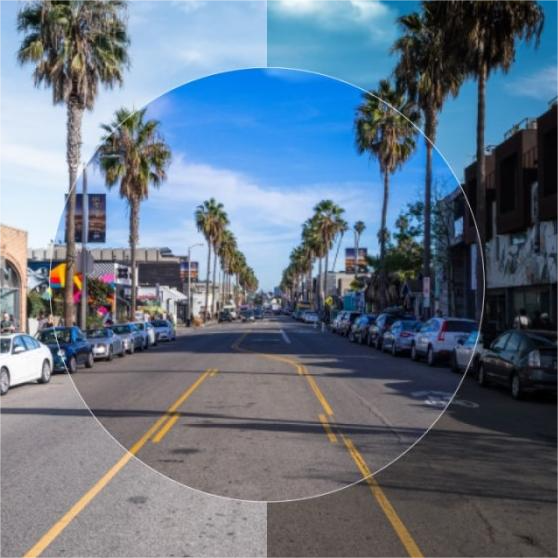
- Photochromic: lenses that darken in sunlight, handy if you read outdoors or on a balcony.
Anti-reflective coating is worth considering for anyone who reads under lamps or on screens, since it cuts the reflections that make small text look washed out.
Choosing a frame for reading glasses
Any frame can hold reading lenses, but a few details make daily use easier:
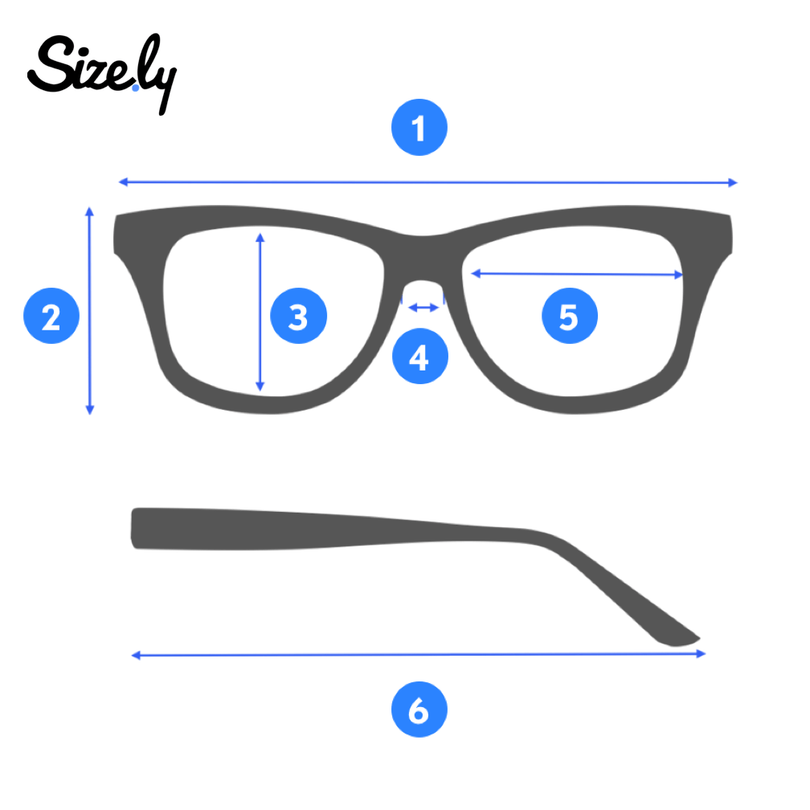
- Lens height of 38 mm or more keeps the whole page in view when you glance down. Check the size printed on the product page or measure an old pair with our frame size guide.
- Light frames matter when glasses go on and off twenty times a day. Acetate frames such as Blivier are light, and metal frames such as Baley sit low on the nose.
- Spring hinges survive being pushed up into the hair or hung from a collar.
Frequently asked questions
What strength reading glasses should I start with?
If you are in your early forties and have never worn glasses, +1.00 is a common first pair. Try the at-home test above, and move in 0.25 steps until text at your normal reading distance is sharp and stays comfortable.
Can I use reading glasses for computer work?
A screen usually sits further away than a book, so many people find their full reading strength too strong for a monitor. A slightly weaker power, or a dedicated pair set for 60 to 70 cm, often feels better. Progressive lenses cover both distances.
Is it bad to wear reading glasses that are too strong?
Readers that are too strong will not damage your eyes, but they force you to hold things closer than you like and can feel tiring. Pick the weakest strength that gives you clear, comfortable reading.
Do I need a prescription to order reading glasses online?
You can order reading lenses by entering the strength you need in each eye. If you have a prescription with an ADD value, enter it in full so the lenses match your eyes exactly, including any astigmatism.
How often does reading strength change?
Many people notice their reading power increases by about +0.25 every two to three years between 40 and 60, then settles. A routine eye exam every one to two years keeps your numbers current.
Find your reading glasses at IGIOO
Pick any frame from the reading glasses collection or browse all eyeglasses, then choose reading or progressive lenses. Add your prescription in a few clicks with our lens selector.